Do Sunset Cruises on Maui Cancel for Weather?
Rain almost never stops a sailing and clouds often improve the sky. High surf at Kaanapali and unsafe wind do. All 20 boats carry free cancellation, usually 24 hours.
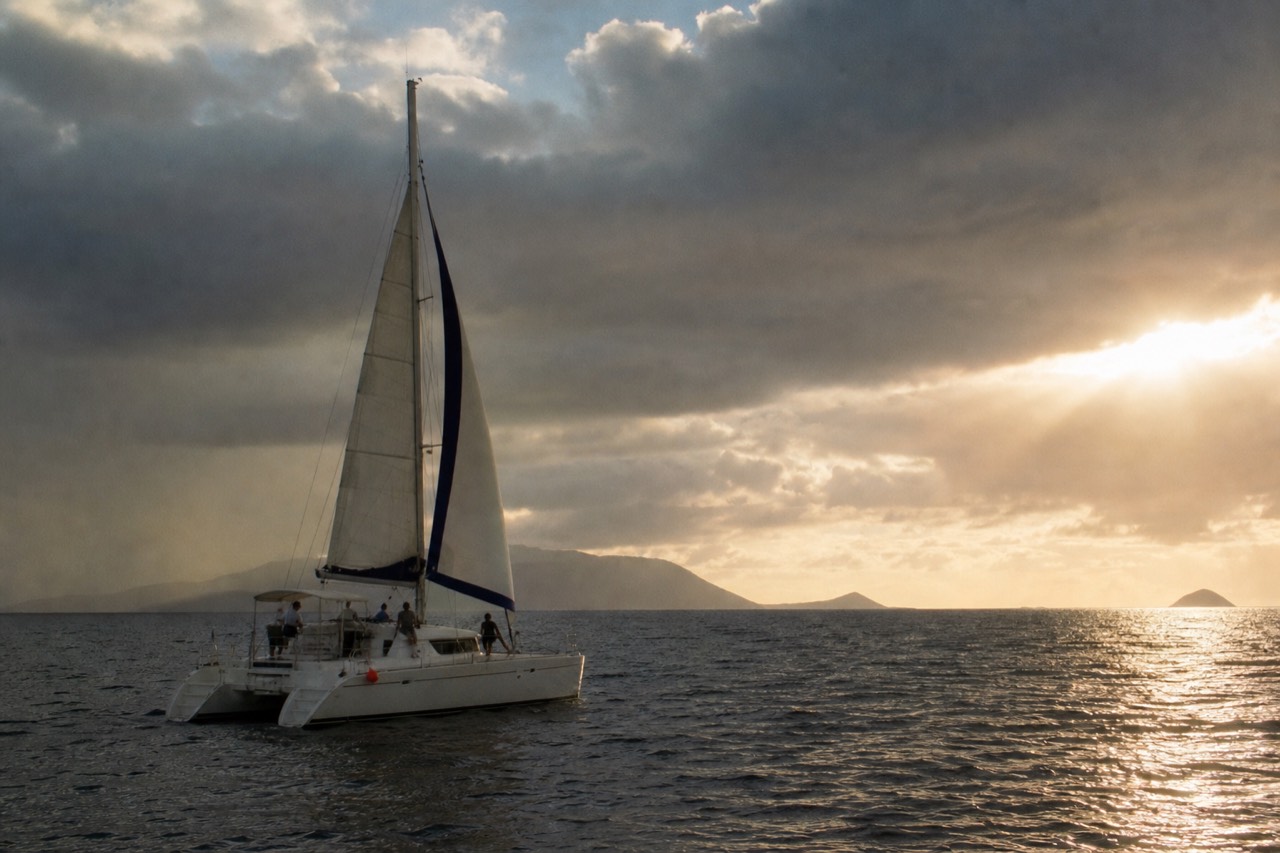
Two things get cancelled on Maui and neither is a rainy afternoon. One is a shore break at Kaanapali big enough to make wading passengers out to a catamaran a bad idea. The other is a wind warning that puts the whole coast on the beach. Everything in between sails.
Do these boats cancel when it rains?
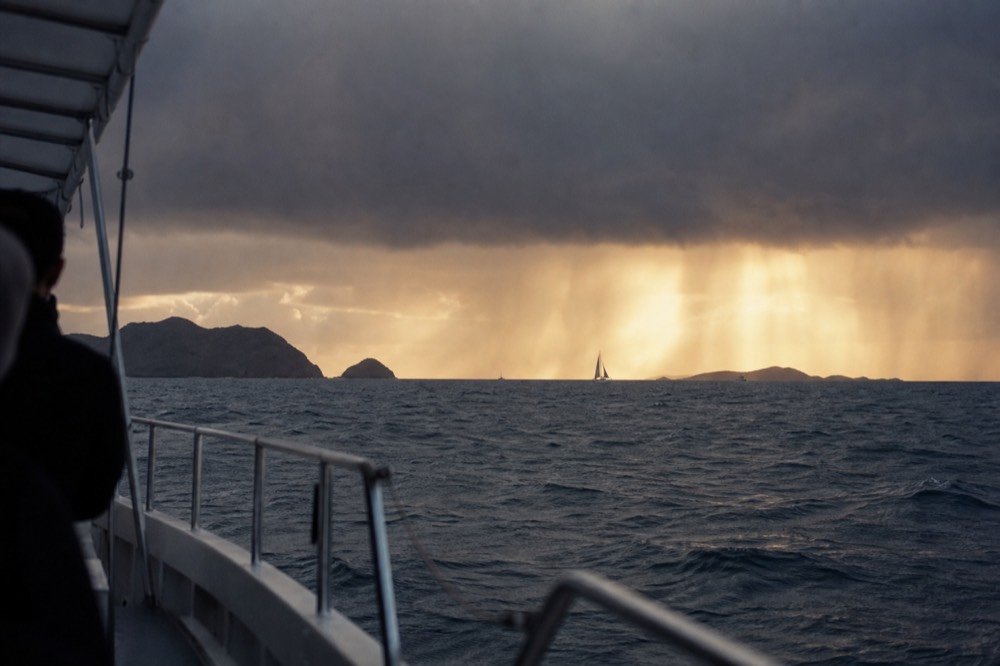
Almost never. Maui's west and south coasts sit in the lee of two mountain ranges, so the trade-wind showers dump on the windward side and arrive here as short squalls that pass in minutes. Operators sail through them. A rain line on the radar is not a cancellation trigger anywhere in this fleet.
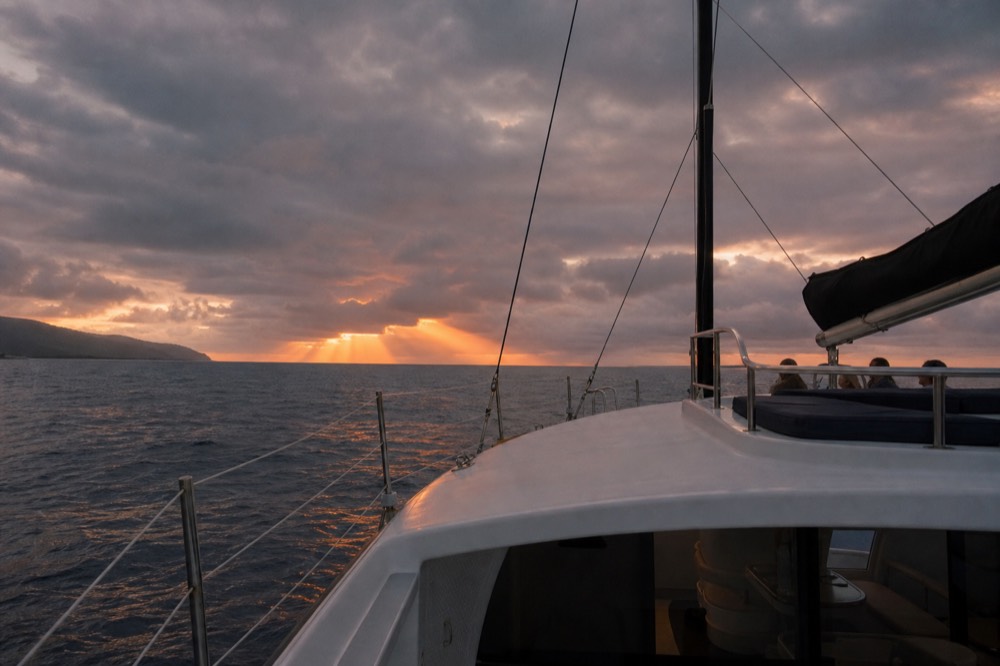
The counterintuitive part is that cloud helps. A completely clear sky gives you a clean disc dropping into the water and then nothing. A broken sky gives the light something to hit, and the colour keeps building for twenty minutes after the sun has gone. Crews will tell you the memorable evenings are the ones that looked doubtful at four o'clock.
Vog, the volcanic haze that drifts up from the Big Island on southerly wind, does the same thing for the same reason. It mutes the midday view and turns sundown deep orange. Nobody cancels for vog.
What actually gets a sailing cancelled?
Unsafe wind and unsafe surf, judged by the captain on the day. A small craft advisory or a gale warning stops departures. High surf on the Kaanapali shoreline stops loading, because those boats have no dock and passengers wade out. Lightning stops everything. Rain, cloud and choppy water do not.
Kaanapali is the case worth understanding before you book, because the problem there is the beach rather than the sea. The catamarans nose onto the sand and passengers walk out wet-footed to the steps, so a big shore break turns boarding into the risky part of the evening. When the surf is up, those sailings cancel or move to a harbor departure, and the operator will tell you which.
Lahaina and Maalaea both load from slips, so shore break is not their issue. Their limits are channel conditions and the wind, and the Auau Channel is sheltered by four islands, which is why the Hawaii marine forecast often reads seas of two feet or less inside the bay while the exposed waters nearby show four to five. If you are choosing between departure points, we compared how the three departure points differ in detail.
Is Maalaea's afternoon wind a reason to cancel?
No. Maalaea Harbor sits on the isthmus where trade winds funnel between the two mountain ranges, which makes it one of the windiest harbors in Hawaii most afternoons. That is normal operating conditions for boats built for it, and the wind typically eases toward sunset, which is exactly when these sailings are out there.
Visitors read a 20-knot afternoon forecast for Maalaea and assume the evening is off. Crews there have been sailing that wind since the harbor opened. Northeast trades of 10 to 20 knots are the island's default, and the boats work in it daily; what changes an evening is a warning, not a breeze.
The honest caveat is comfort rather than safety. The outbound leg from Maalaea into a fresh trade is the choppiest twenty minutes in the whole fleet, and it flattens once you are in the lee. Anyone prone to motion sickness should read that as a reason to prepare rather than to cancel, and our notes on seasickness on an evening sail cover what actually works.
What happens in each weather scenario?
Short version: showers sail, overcast sails, trades sail, warnings do not, and Kaanapali's beach loading is the one departure style that fails on surf alone. When an operator cancels, you get a reschedule or a full refund, never a credit you have to argue for.
| Scenario | Does it sail? | What to expect |
|---|---|---|
| Passing showers or vog haze | Yes | Squalls blow through in minutes, and the sky usually improves after |
| Solid overcast | Yes | No visible disc on the horizon, but colour often fires from underneath |
| Northeast trades, 15 to 20 knots | Yes | Normal conditions; choppier outbound at Maalaea, calmer at dusk |
| High surf on the Kaanapali shoreline | Often not | Beach loading is the problem, not the sea; sailings cancel or relocate |
| Small craft advisory or gale warning | No | Operator cancels; reschedule or full refund |
| Thunderstorm or lightning | No | Departures stop until it clears |
| Winter swell with whales offshore | Case by case | Boats sail, but must stay 100 yards off any humpback |
The whale-season line matters from November through May, peaking January to March. Federal rules keep every vessel 100 yards from a humpback anywhere in Hawaiian waters, so a boat may slow, alter course or hold position. That is a rule being followed, not a delay, and no honest operator promises sightings.
What if you want to cancel yourself?
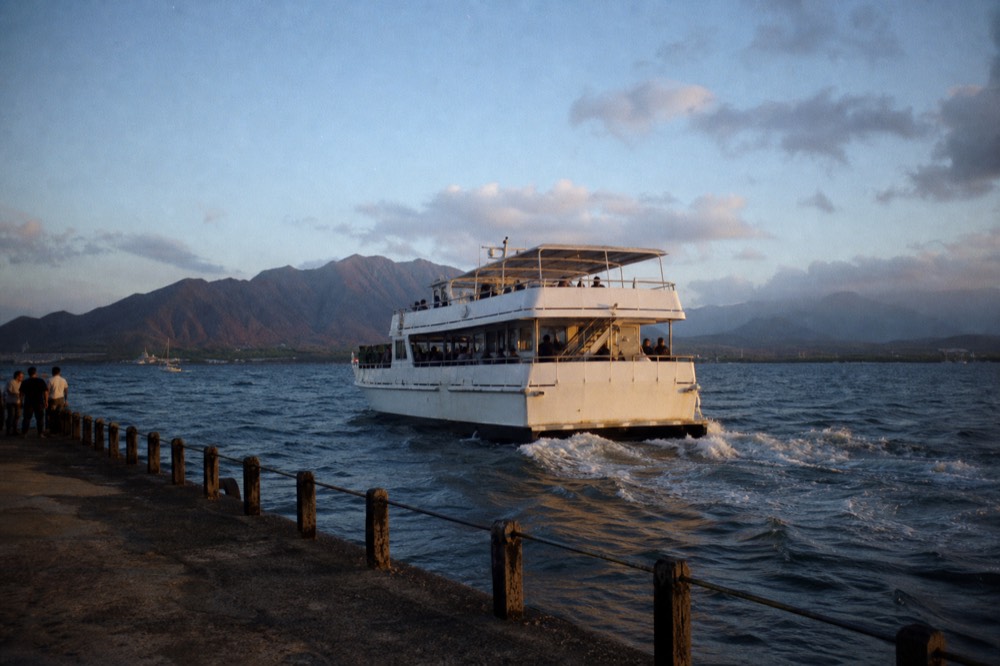
Every one of the 20 evening boats carries free cancellation. The usual cutoff is 24 hours before departure, with Teralani's sailings at 48 hours. Cancel inside the window and you are refunded in full, which means booking early costs you nothing if the week turns out badly.
This is the single most useful thing to know when you are booking from four thousand miles away with no idea what the weather will do. Lock in the evening you want now, watch the marine forecast in the two days before, and move if you need to. The boats fill in high season, and a held reservation you can drop for free beats a gamble on availability.
Rebooking is easier than cancelling outright. If your evening looks marginal, most operators will shift you to another night rather than refund you, and there is usually a same-week slot. The Maalaea sunset fleet has the most departures per evening on the island, which makes it the easiest place to move a date.
Which boat handles bad weather best?
Bigger decks and more shelter. The Pride of Maui carries the largest deck space in the fleet at $168 for a dinner buffet with live hula, so a squall does not mean everyone crammed under one awning. Triple and double-deck boats out of Maalaea give you the same option of moving inside.
Deck size is the practical measure, because on a marginal evening the difference between a good night and a wet one is whether there is somewhere to stand. The catamarans with wide trampolines and covered mid-sections handle it well; the small sailing boats are the ones where a squall is felt by everybody.
None of this should push you toward a boat you did not want. Weather stops so few of these sailings that choosing purely defensively means giving up the small quiet sails for a big one you will not enjoy as much. Pick the evening you actually want, keep the free cancellation in your pocket, and check the marine forecast on the morning of.
Your evening, your choice
Choose your Maui evening
Initial editorial pick — use the optional filters to narrow it.
Compare options, fit and total cost
Why consider another option?
- Calypso sunset dinner cruise — Table-side dinner and two included alcoholic drinks on a two-hour harbor cruise. Maalaea · 2 hours · English. Additional drinks cost extra. Infants 0–3 have no included meal. Confirm any access requirements with the operator.
- Malolo sunset cocktail cruise — Two hours on the bay with soda, juice and water included. Maalaea · 2 hours · English. Alcohol costs extra; no dinner included. Onboard purchases require a physical credit card. Check in 30 minutes early.
- Teralani sunset cocktail sail — Chef-inspired appetizers and an open bar on a two-hour catamaran sail. Kaanapali · 2 hours · English. Wade through the water and remove shoes to board. Not suitable for wheelchair users. Alcohol 21+; bring photo ID. Cancellation cutoff is two days ahead.
Compare the whole evening
Use current, same-currency totals for your group, including tax, food, drinks, parking and any planned tip.
A shared ticket total is not an exclusive-charter quote. Compare inclusions as well as the difference.