Which Hawaiian Island Has the Best Sunsets?
Every island gets the same sun. What differs is which way the coast faces, what stands in the frame, and how calm the water is. Twenty evening boats run from three Maui harbors.
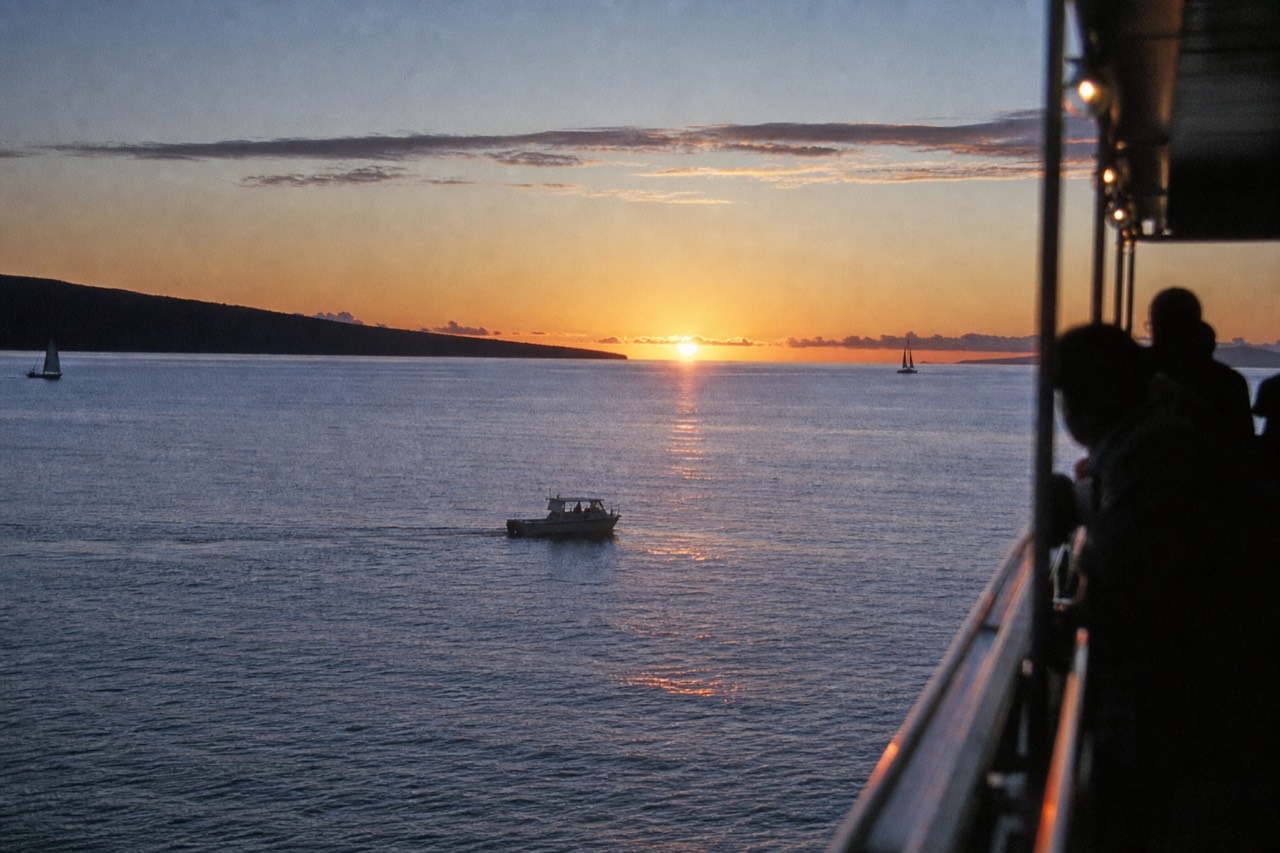
Hawaii's main islands sit inside about five degrees of longitude, so clock sunset differs across the chain by roughly twenty minutes, not hours. The angle the sun takes to the horizon is effectively identical from Hilo to Hanalei. What is not identical is the direction each stretch of coastline points, what stands between you and the horizon, and whether the sky above you is dry lee-side air or the wet side of a mountain.
Does one island actually get a better sunset?
Not in any astronomical sense. The sun sets at the same angle across the whole chain and within twenty minutes on the clock. The differences that matter are geometry and weather: whether your coast faces west, whether another island sits in the frame, and whether the trade winds are dumping cloud on you or on the ridge behind you.
That is why "best sunset island" arguments usually turn out to be arguments about two specific beaches. Someone comparing Waikiki in July to Kaanapali in January is comparing a summer sunset behind a mountain range with a winter sunset behind an island, and drawing a conclusion about islands.
The useful question is narrower. Given where you are staying and what month it is, which direction does the sun actually go down in, and what will be in front of it.
How does each island's sunset geometry compare?
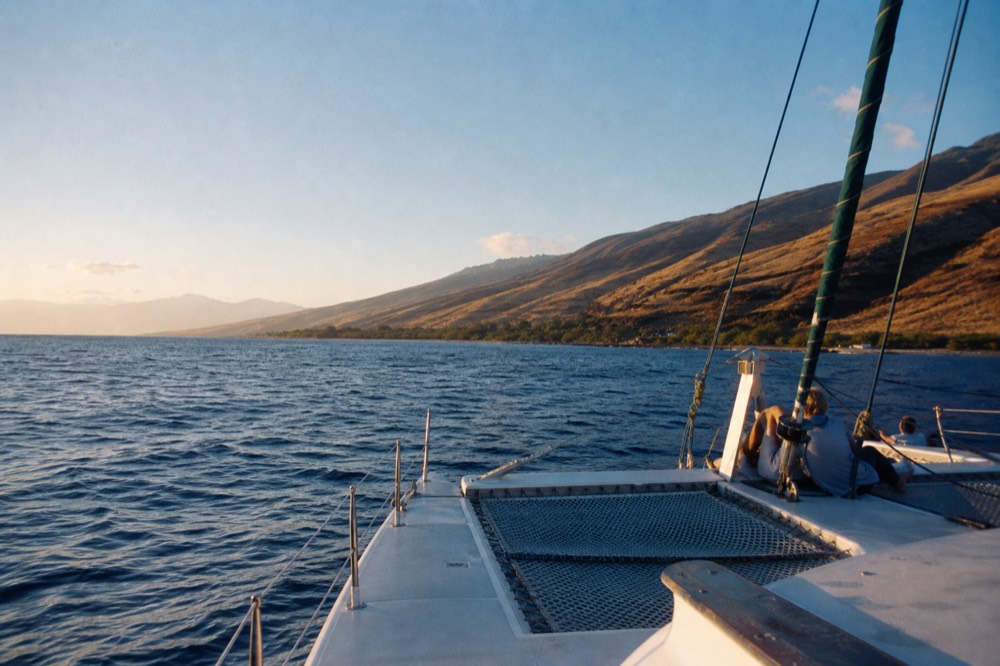
Maui and the Big Island both have true west-facing lee coasts. Kauai's is on its remote western end rather than the popular north shore. Oahu's tourist core at Waikiki faces south-southwest, which gives it ocean sunsets in winter and ridge-line sunsets in summer. Only Maui puts other islands in the frame.
| Island | Where you would watch | Which way that coast faces | What is in the frame | Typical evening sky |
|---|---|---|---|---|
| Maui | Kaanapali, Lahaina, Maalaea | West and west-northwest | Lanai and Molokai in silhouette | Dry lee side, sheltered channel water |
| Oahu | Waikiki, or Ko Olina and the west shore | Waikiki faces south-southwest, Ko Olina faces west | Open water in winter, the Waianae ridge in summer from Waikiki | Lee side, generally dry, city haze at the horizon |
| Kauai | Polihale and the west end, Poipu in the south | West on the far west end | Open ocean, Niihau on clear evenings | Driest in the west, much wetter on the north shore |
| Big Island | The Kona coast | West | Open Pacific, nothing offshore | The clearest and driest of the four, mountains block the trades |
| Molokai and Lanai | Quiet west-facing shores | West | Each other, and Maui | Dry, empty, almost no commercial boats |
The Big Island's Kona side deserves its reputation. Two mountains over 13,000 feet strip the moisture out of the trade winds before they reach the leeward coast, which is why astronomers built on that island and why Kona evenings are so reliably clear. What Kona does not have is anything in the frame. The sun goes into flat open Pacific, night after night, beautifully and without a foreground.
Kauai is the opposite trap. The coast everyone photographs, Napali, faces west-northwest and is spectacular, but most visitors sleep on the north shore near one of the wettest mountains on earth. The genuinely dry sunset coast is out past Waimea, an hour of driving from the resorts and largely without boats.
What does Maui's west side do differently?
It combines three things no other island has together: a coast pointing straight at the sunset, two islands standing in the frame to break up the horizon, and a channel sheltered on four sides that stays flat enough to sail comfortably at dusk. That last one is what makes an evening on the water practical rather than an endurance test.
From Kaanapali the sun moves through a seasonal arc that is worth knowing. In winter it drops behind Lanai, so you get a hard black island profile with the light burning around its edges. In midsummer it swings north and sets in the open gap between Lanai and Molokai, which gives you the clean water horizon instead. Same beach, two entirely different photographs, six months apart.
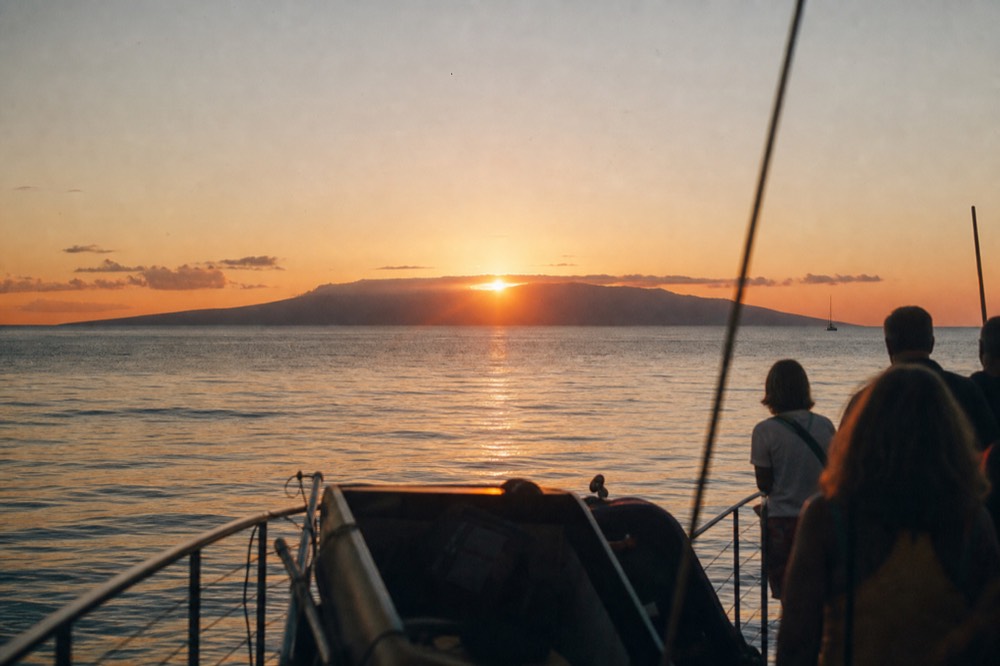
The Auau Channel between Maui and Lanai is protected by four islands at once, which is why it is usually the calmest cruising water in the state. That matters more than it sounds. Flat water is the difference between an open bar on a stable deck and a group of people gripping the rail. The marine forecast for Hawaiian coastal waters will show you how much gentler the inter-island channels read than the exposed north and east shores.
Why does Maui have so many more evening boats?
Because the geography supports them. Twenty evening sailings run from three Maui harbors, carrying 6,267 reviews between them, from a $59.95 cocktail cruise to a $290 five-course dinner. Calm sheltered water plus a west-facing coast plus an island silhouette is a product, and operators built a fleet around it.
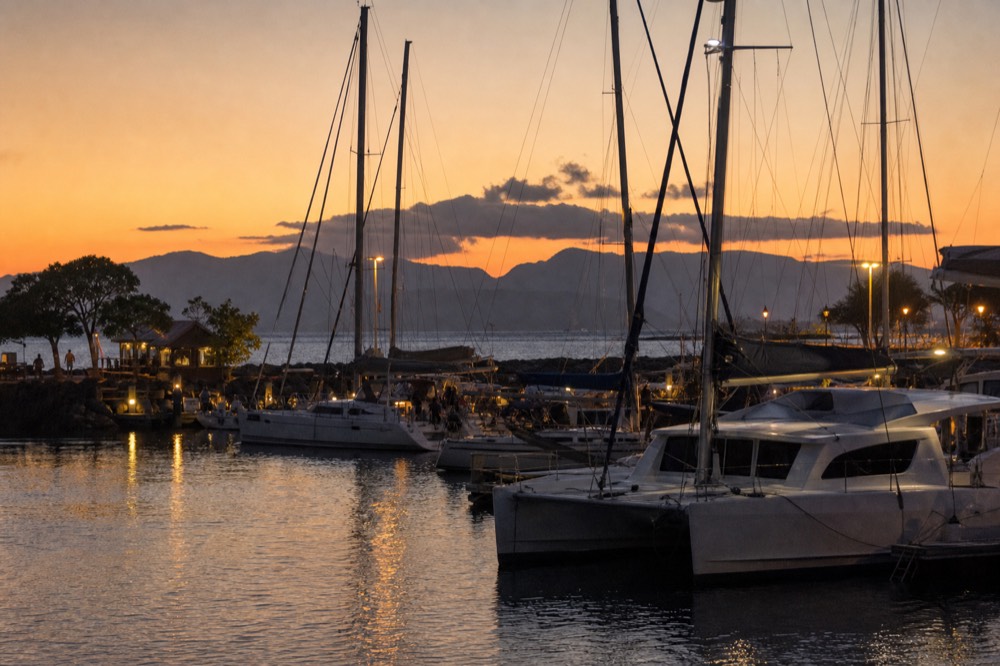
Boat density follows conditions, not marketing. A harbor that cannot reliably put a catamaran on flat water at 5pm does not develop a nightly sunset fleet. Kona has clear skies and runs sunset trips, Oahu runs them out of Waikiki and Ko Olina, but neither has the concentration Maui does, and neither can offer the silhouette.
That density is also why choosing gets confusing. Boats out of Kaanapali load off the beach, Lahaina departures leave from a harbor still working through its recovery, and Maalaea sits closest to the south and central resorts. Our page on what sets an evening on Maui's water apart goes through the specifics, and every boat compared lays out all twenty side by side with ratings, prices and departure points. Every one of them carries free cancellation, typically to 24 hours out.
So which island should you book the sunset boat on?
Maui, if you have the choice and want the classic version: sun into the sea with Lanai in silhouette, on water calm enough to hold a drink. Book Kona for the clearest sky and the emptiest horizon, Oahu's west shore rather than Waikiki if you are staying there, and Kauai's far west if you are willing to drive.
If you are already on Maui, the decision is which harbor and which format rather than which island.
If you are on another island, do not talk yourself out of the sunset there. Go to the coast that faces west rather than the one nearest your hotel, check which month you are in, and accept that the horizon will be empty rather than framed. The islands with fewer boats often have better beaches to stand on. For the Maui version, the island's best sunset viewpoints covers the land options, and the Kaanapali beach-loading fleet covers the ones that leave straight off the sand.
Your evening, your choice
Choose your Maui evening
Initial editorial pick — use the optional filters to narrow it.
Compare options, fit and total cost
Why consider another option?
- Calypso sunset dinner cruise — Table-side dinner and two included alcoholic drinks on a two-hour harbor cruise. Maalaea · 2 hours · English. Additional drinks cost extra. Infants 0–3 have no included meal. Confirm any access requirements with the operator.
- Teralani sunset cocktail sail — Chef-inspired appetizers and an open bar on a two-hour catamaran sail. Kaanapali · 2 hours · English. Wade through the water and remove shoes to board. Not suitable for wheelchair users. Alcohol 21+; bring photo ID. Cancellation cutoff is two days ahead.
Compare the whole evening
Use current, same-currency totals for your group, including tax, food, drinks, parking and any planned tip.
A shared ticket total is not an exclusive-charter quote. Compare inclusions as well as the difference.