Can You See Whales on a Sunset Cruise in Maui?
From December to April, very likely: the boats cross a humpback nursery. From June to October, no. Volunteers counted 4,782 whales across 44 sites in the 2026 season.
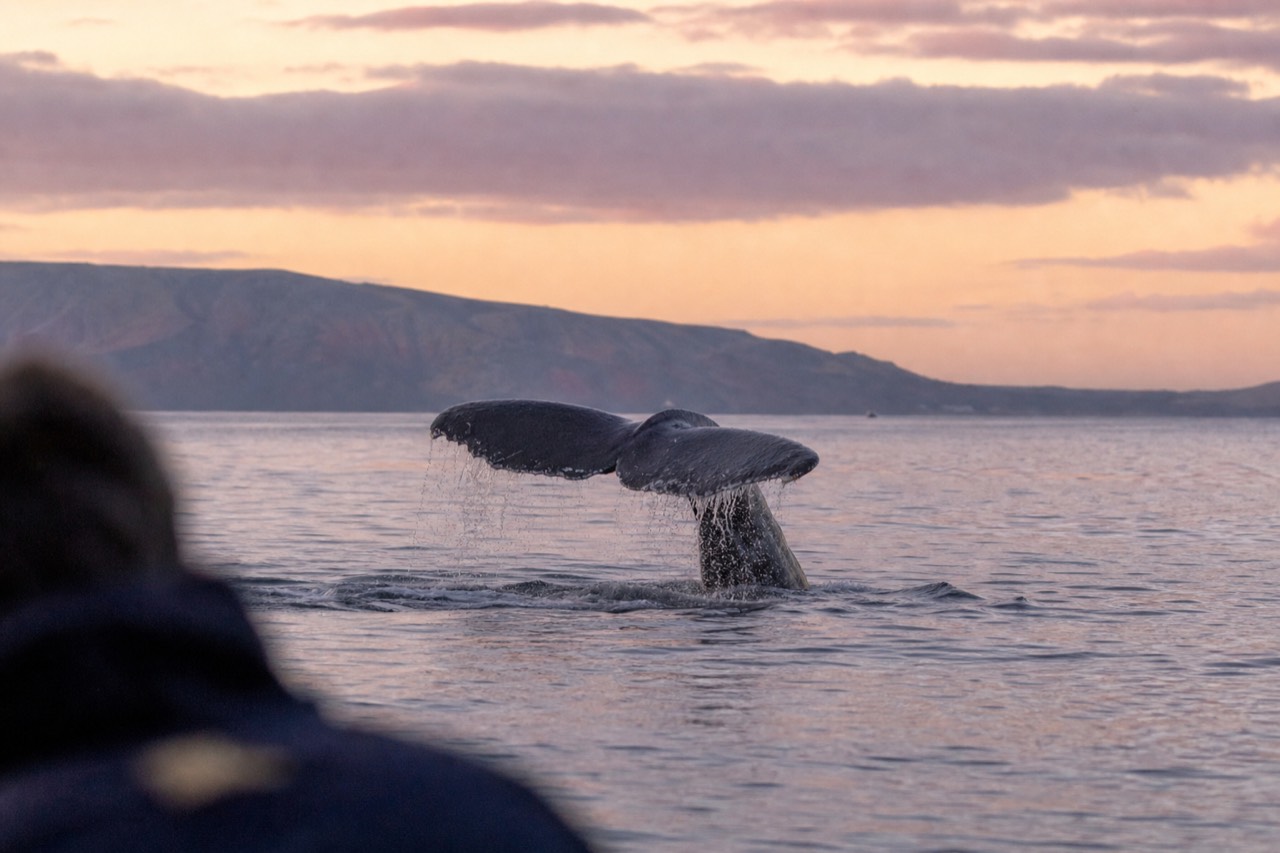
The water between Maui and Lanai is shallow, warm and shielded from open ocean swell by four islands at once. Humpbacks that spend their summers feeding in Alaska come back to it every winter to give birth. Evening boats leaving Kaanapali, Lahaina and Maalaea all cross some part of that same channel, which is why the whale question comes up on almost every booking page between December and April.
Will you actually see whales on an evening sailing?
In season, very likely. From December through April the boats work water that holds mothers, calves and escort males, and blows are often visible from the harbor before you even board. Outside that window the honest answer is no. Crews never guarantee sightings, and any listing that promises them is selling you something it cannot deliver.
Nothing about a sunset departure hurts your odds. Whales do not keep office hours, and the low angle of late light actually helps: a blow catches the sun and stands up white against dark water from a long way off. What changes at that hour is the crew's attention, which is split between the whales and the sail.
The rule of thumb from the deck is that in February you stop counting. In late April you might get one distant blow and talk about it for the rest of the trip.
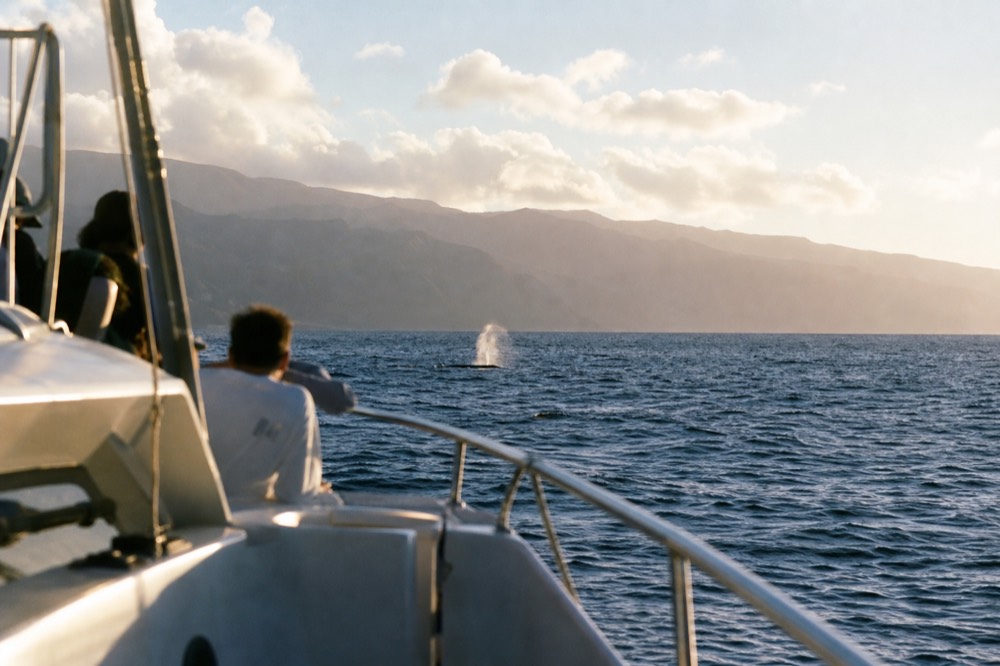
Which months have whales and which do not?
November through May is the sanctuary season, but the dependable stretch is December to April, and January through March is the peak. June, July, August and October are empty. September occasionally produces a first scout: the 2025 to 2026 season opened with sightings reported off Maui in September, weeks before anyone expected them.
| Month | Odds from an evening boat | What the season is doing | Seasonal whale dinner running |
|---|---|---|---|
| November | Possible, building | Sanctuary season opens, first arrivals scattered | No |
| December | Likely | Numbers climbing quickly through the month | Yes |
| January | Very likely | Peak begins | Yes |
| February | Very likely | Densest month of the year | Yes |
| March | Very likely | Still peak, calves close to shore | Yes |
| April | Likely, thinning | Northbound departures begin | Yes, final month |
| May | Unlikely, stragglers only | Season closes | No |
| June | None | Population feeding in Alaska | No |
| July | None | Feeding season | No |
| August | None | Feeding season | No |
| September | Rare early arrival | 2025 saw sightings this early | No |
| October | None | Quiet water | No |
Those zeros are the useful part of the table. Plenty of pages describe Maui as a whale destination without saying when, and a family booking a July evening on that basis is going to be disappointed by something the boat had no control over. If whales are the reason for the trip, the seasonal whale and sunset sailings explain which products carry a naturalist and which simply happen to be on the water at the right time of year.
Why does this particular channel concentrate them?
The Auau Channel between Maui and Lanai is shallow, protected on four sides by Maui, Lanai, Molokai and Kahoolawe, and largely free of the swell that runs through open Hawaiian water. That combination makes it one of the safest nurseries a newborn calf can be born into, and it sits directly under the evening boat routes.
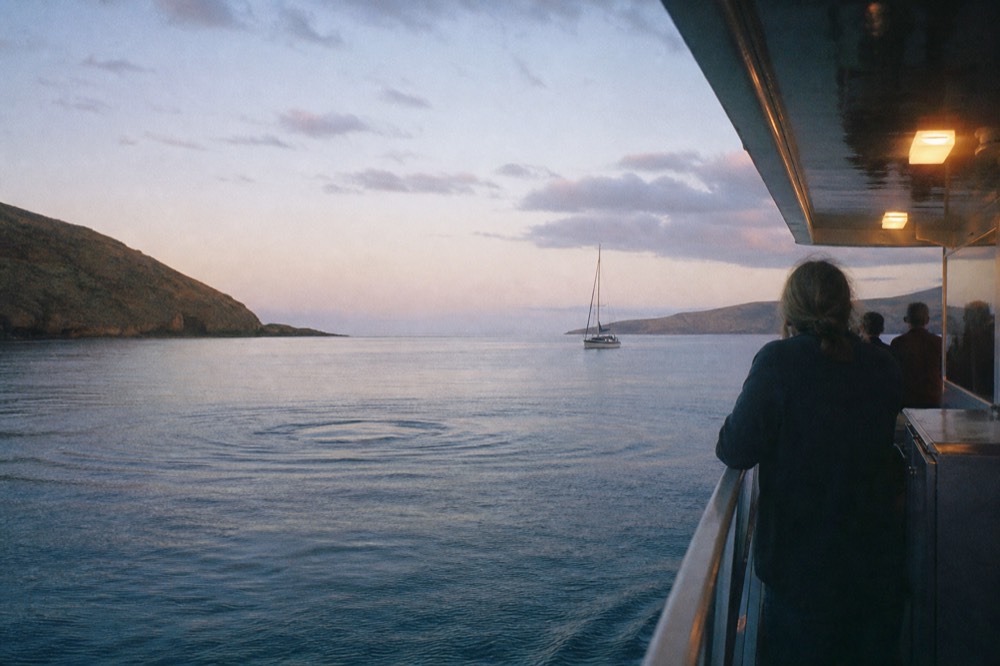
Depth matters more than most people assume. A calf born in deep exposed water has to work harder to breathe and stays vulnerable for longer. The shelf between the islands gives mothers flat water and no surf, and the same flat water is why the channel is usually the calmest cruising ground on the island. Two different reasons, one piece of geography.
That is also why boats out of the west side and out of Maalaea both find whales, though from different angles. The Lahaina harbor departures sit closest to the channel's narrowest point, while the Maalaea fleet runs south around the bay before turning toward the same water.
How close can a boat legally get?
Federal rules keep every vessel in Hawaiian waters at least 100 yards from a humpback, with no exceptions for tour boats. Crews approach no closer, cut engines and wait. What the rule does not do is stop a whale from swimming to you, and a curious animal surfacing beside the hull is the encounter people remember.
The 100-yard line is a floor on the boat's behaviour, not a ceiling on the whale's, a distinction the full whale-season boat guide works through month by month. Captains describe shutting down and drifting while a mother and calf close the distance themselves, sometimes to arm's length off the transom. Nobody can promise this and no captain will try to engineer it, because maneuvering toward the animal is exactly what the rule forbids. NOAA's guidance for boaters in the sanctuary sets out the distances and the approach rules in full.
Practically, this means the difference between boats is not proximity. It is height, quiet and eyes. A sailing catamaran under sail with the engines off is a genuinely quiet platform, and a crew that has run the channel for decades spots a blow well before you do.
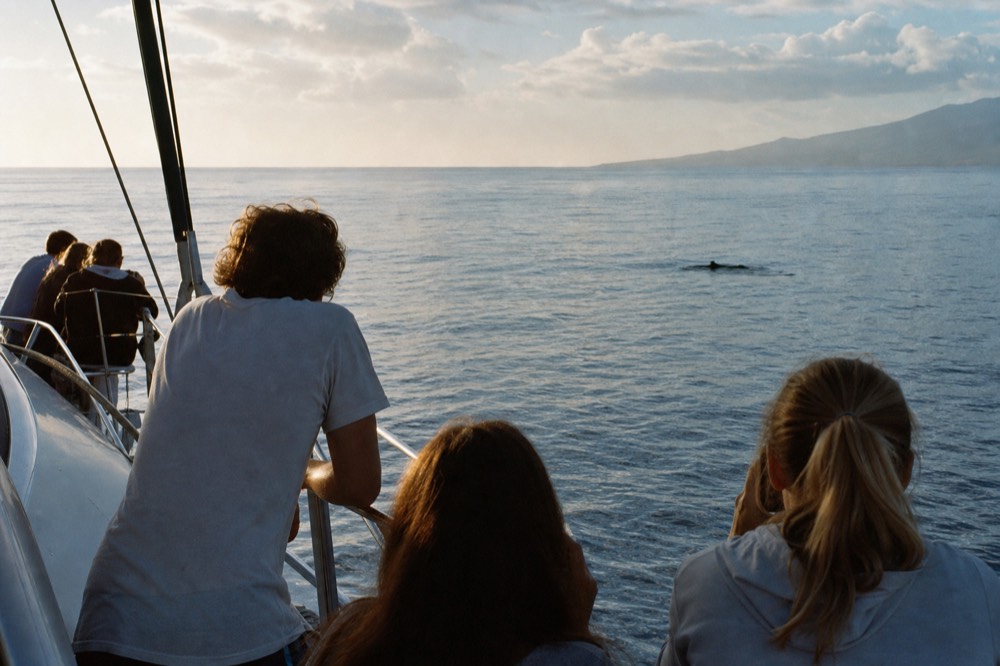
Is the dedicated whale dinner worth booking over a normal sail?
It buys time and a naturalist rather than a better chance of a sighting. The seasonal three-hour dinner sailing runs $189 against roughly $99 to $180 for a standard two-hour evening boat, and it holds 4.7 across 516 reviews. The extra hour on the water in February is the part that earns it.
Time is the real variable. A two-hour boat that reaches the channel, turns for sunset and heads back is committed to a schedule, while a three-hour trip built around whales can sit and wait when something is happening. In peak season that difference decides whether you watch a pectoral slap for ten minutes or catch it over your shoulder as the boat turns.
It only runs December through April, which is honest on the operator's part, since a whale watch dinner in July would be a dinner.
And if your trip falls between June and October, book the boat for the sail, the drinks and the light, with the month-by-month sunset clock deciding your departure time. The whales will be back in November.
Your evening, your choice
Choose your Maui evening
Initial editorial pick — use the optional filters to narrow it.
Compare options, fit and total cost
Why consider another option?
- Sea Maui sunset cocktail sail — Heavy appetizers and an open bar on a two-hour beach-loading sail. Kaanapali · 2 hours · English. Barefoot beach boarding; moderate fitness. Check in 30 minutes early. Alcohol 21+ with ID.
Compare the whole evening
Use current, same-currency totals for your group, including tax, food, drinks, parking and any planned tip.
A shared ticket total is not an exclusive-charter quote. Compare inclusions as well as the difference.